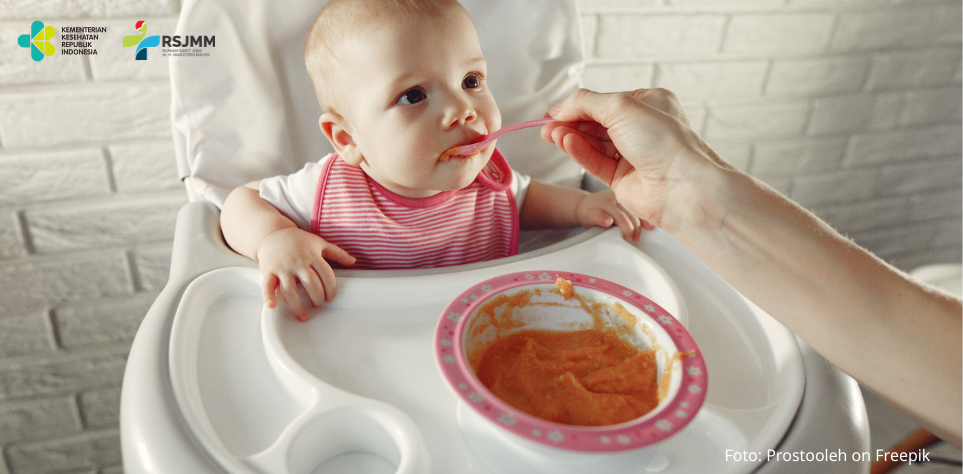
THE IMPORTANCE AND STAGES OF GIVING MPASI TO BABIES
The thing that parents are most worried about in caring for babies is generally related to nutrition. Babies can get nutrients through breast milk for the first six months. But as the baby grows, consuming breast milk is certainly not enough. At the age of 6 months, usually babies will eat complementary foods or commonly known as MPASI. So MPASI is given when the baby is in the transition period from consuming breast milk or formula in solid foods.
MPASI is needed because after 6 months of age, babies need additional energy, protein, and iron. And it cannot be obtained by consuming breast milk.
The purpose of giving MPSI is:
1. Introduce the texture of food to the baby so that the baby's feeding skills can be honed.
2. Increase immunity in babies, because the content of MPASI includes antioxidants, vitamin A and FE, often found in chicken liver, fish spinach, broccoli and others.
3. Helps bone formation, MPASI must contain protein and calcium
When is the right time to give MPASI?
Breast milk complementary foods can be started when the baby has shown signs of being ready to eat. Babies are usually able to consume MPASI at the age of 6 months. The signs that the baby is ready to eat are: The head is upright, can sit without help, the reflex of sticking out the tongue is reduced, interested if you see people eating, trying to reach for food and open your mouth if you are served with food
STAGES OF GIVING MPASI
Make sure the first MPASI uses a very soft texture. So that babies quickly chew soft and lumpy food, even if they have no teeth. Next, Finger food is introduced.
Finger food is a solid-shaped food that is the size of the baby's hand. This food can be in the form of cakes, fruits, or vegetables that can be eaten by your little one without having to be helped. It should be easy to bite, chew, and hold by the baby himself. Finger food should be given to babies aged 8-9 months. By giving him finger food, he can train his little one to eat without being fed, as well as train his fine motor skills, as well as his ability to bite and chew food.
Several types of food that can be used as finger food for the Little One:
1. Boiled Vegetables: such as potatoes, carrots, cauliflower, broccoli, or sweet potatoes., it is better to steam or roast the vegetables first until they are soft.
2. Fruit: ripe apple, pear, mango, or papaya, ripe avocado banana, dragon etc.
3. Cereal as a finger food snack for the Little One. Give cereal that is easy to hold by him and choose one that is low in sugar and without added dyes.
4. Eggs are foods rich in protein, choline, vitamin B2, B12, and folate that are good for baby development. But before giving the egg, make sure it is cooked, because, half-cooked eggs still contain Salmonella bacteria that can disturb the digestive tract.
5. Cheese contains good calcium to support baby's bone growth. Therefore, giving cheese as a complementary food to breast milk.( MPASI) in its first year is the right thing. Choose cheese that has a soft texture, does not smell, and is not sticky.
6. Meat is a good source of iron for growth. It is recommended to give the meat cooked until it is tender, soft and shredded.
Every time you give finger food, you need to taste it first to make sure the food is easy to bite, the pieces are just right, soft, and melt in the mouth.
Introducing finger food to children from an early age is an important thing. However, you must remain aware of the possibility of choking when eating it. So, always keep an eye on and damping when consuming finger food, okay?
Food ingredients that should be avoided for MPASI
Foods and groceries that should not be consumed by babies aged < 1 year :
Salt: Foods high in salt should be avoided because the baby's kidneys have not been able to process salt properly, for example food: fast food and instant
Honey: honey contains a type of Clostridium botulinum bacterium that can cause baby intestinal poisoning
Sugar: preferably a sweetener of foods derived from fruit, or formula milk
Artificial sweetener : avoid its use because it can be at risk of tooth decay and diarrhea.
Whole nuts, so as not to choke then you should avoid giving whole nuts to babies
Tea or coffee: tannins in tea can absorb iron in food, caffeine can cause headaches, impaired calcium absorption and tooth decay
Low-fat foods: because babies need calories, it is better to give foods rich in fat so that they have calorie reserves.
Is there any impact on giving MPASI if it is not on time?
If it is too fast (before 4 months): causing the child is not ready, it can interfere with the absorption of nutrients from breast milk and is at risk of obesity. If it is late (after 6 months) there is a risk of lack of nutrients, especially zinc and iron.
Things that need to be considered in giving MPASI
1. Keep hands, food, and cutlery clean..
2. Food ingredients must be cooked until cooked. The cooking process will kill germs in food ingredients so that food is safer to consume.
3. Can add oil, butter, or coconut milk. Children need more calories for growth and development. So don't be anti-fried or anti-fat use oil that is still clean and good.
4. Separate the cutting board to cut raw materials and cook.
Author: Meidersayenti, SGZ. RD
REFERENCES:
1. Kementerian Kesehatan RI. 2011. Modul Pelatihan Konseling MP-ASI Pedoman Pelatih. Jakarta: Ditjend Bina Gizi dan KIA.
2. Ibnu, I. N., Thaha, A. R. M., & Jafar, N. 2016. Pola Asuh Pemberian Makanan Pendamping Asi (Mp-asi) pada Ibu Baduta di Tanah Adat Kajang Ammatoa Kabupaten Bulukumba. Media Kesehatan Masyarakat Indonesia, 9(4), 257-263.
3. Hayati, Ida. 2012. Pola Pemberian Makanan Pendamping ASI Bayi 6-12 Bulan pada Etnis Banjar di Kelurahan Lerong Ilir. Jurnal Promosi Kesehatan Nusantara Indonesia, Nomor 10
4. Bayu, M. 2014. Pintar ASI dan Menyusui. Jakarta: Panda Media