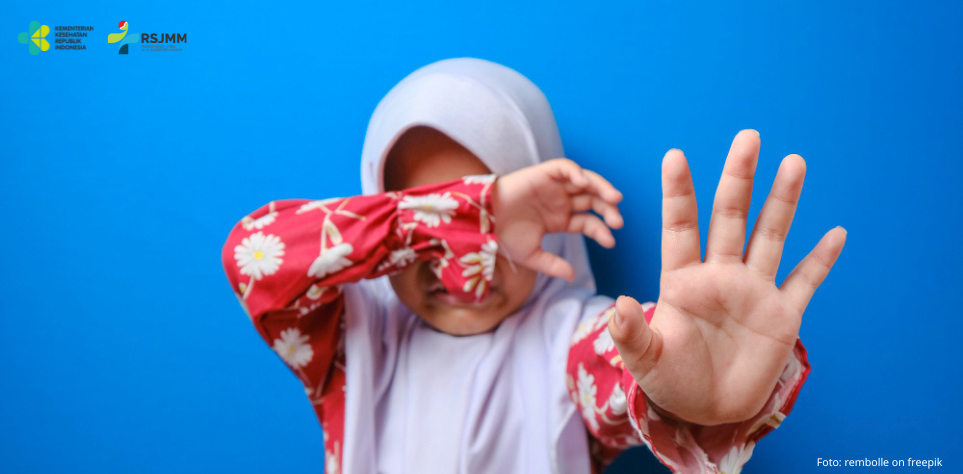
Stop Bullying Right Now!
Recently, we have been treated to various news about cases of bullying that make our hearts sad. The victim experienced severe psychological trauma and the perpetrator received heavy legal sanctions. Both victims and perpetrators can have psychological problems that need to be given comprehensive treatment. Bullying can also be a predictor of the emergence of mental disorders in the future.
Bullying is a form of violent behavior that is deliberately carried out by a person or group of people who feel strong or powerful with the aim of hurting or harming a person or group who feels powerless. 'Bullying' can be done in verbal, physical, relational and cyber forms. Currently, many children and teenagers are victims of bullying, either directly at school, tutoring, in the environment or through social media such as Facebook, Twitter, Tiktok, Instagram, online games , role plays , etc. Research shows that children and adolescents who are victims of bullying are very vulnerable to serious problems with their mental, physical and academic health.
Types of Bullying
1. Physical
For example: hitting, pushing, kicking, grabbing, pinching, injuring, etc.
2. Verbal
For example: threatening, calling bad or rude words, making derogatory comments, teasing, badmouthing, etc.
3. Social
For example: Staying away, telling friends not to be friends with him, not being invited to join groups, telling bad things, rumors, gossip, etc.
4. Cyber
For example: making fun on social media, harsh words, sarcasm, etc.
Consequences of Bullying
Cook et al in 2010 reported that victims of ' bullying ' more often experienced symptoms of depression, self-harm, suicidal thoughts, and low academic achievement. Meanwhile, those who carry out ' bullying ' are also not free from bad attitudes and behavior such as: defiant behavior, often skipping school, smoking and using drugs and other violent behavior. Those who are victims and perpetrators of bullying also often experience headaches, back pain, stomach ache, sleep problems, decreased appetite and frequent bedwetting (Gini & Pozzoli, 2009).
" Bullying " is also a predictor of the emergence of other serious mental disorders such as anxiety, depression and psychosis. The future of the next generation is disrupted by bullying , so there needs to be a tactical and systematic effort to prevent and handle it.
Parents, communities, schools and mental health professionals play an important role in preventing and treating the problem of ' bullying '. Good communication and proper parenting by parents will make children feel free and comfortable to talk about what they are experiencing so that children can remain calm in facing these problems.
Many children do not report that they are victims of ' bullying ' behavior. Schools need to implement strict rules to prevent the problem of ' bullying ' by implementing good management of children who tend to carry out aggressive behavior. Families and schools need to carry out life skills training and education so that children and adolescents have the ability to overcome their life problems, especially those of their peers.
Every child who is a victim or perpetrator of ' bullying ' needs to be handled professionally so that the behavior and impact does not cause further psychological problems in the future.
Psychological Symptoms of Bullying
When someone engages in bullying , whether physically, verbally, socially or cyber, they have hurt other people's feelings.
Various uncomfortable feelings that can occur in those who are bullied include:
- Sad
- Afraid
- Angry
- Worry
- Confused
- Embarrassed
- Alone
- Tired
- Chaotic
- Flustered
- Don't dare leave the house
- Not safe
- Etc
If good treatment and assistance is not provided, mental disorders and other negative impacts can occur, namely:
- Depression
- Anxiety
- Psychotic
- PTSD (post traumatic stress disorder)
- Self harm (hurting yourself)
- Suicide (suicide)
All these changes in attitudes, behavior and feelings can interfere with daily activities or activities. Let's recognize friends or people around us who experience these feelings as a result of being bullied . Let's be his friend and help him because these feelings are really bad and they need a calming friend.
All types of bullying aim to hurt someone.
Stop bullying because no one wants to be hurt.
Let's fight bullying !
Causes of Someone Doing Bullying
Almost all of them have experienced bullying in their lives before the age of 20. The consequences are often quite difficult to deal with, both physically and mentally. The differences that a person has are often used as an excuse for bullying , being considered strange, having shortcomings, weaknesses, etc. Bullying perpetrators use this to take control over us, creating insecurity with the aim of hurting us physically and emotionally. As victims of bullying, we begin to internalize this and begin to blame ourselves for the uniqueness that we have.
But did we know that bullying behavior is actually more caused by psychological problems in the perpetrators of bullying themselves.
Several studies show that those who commit bullying experience the following:
1. Stress and Trauma
Bullying perpetrators experience stress and trauma in their lives, such as: loss of someone they love, divorce of their parents, bad life experiences, disappointment, etc. Some people can respond positively to the stress and trauma they experience, but others carry out aggressive actions such as bullying as a response to facing this.
2. Violent Behavior in the Neighborhood
Violent behavior, whether verbal or physical, is easily imitated by a child, which then becomes his character and personality in the future. Frequently witnessing violence in the home, environment, films, soap operas, games , etc. can trigger violent behavior such as bullying .
3. Low Self-Esteem (low self-esteem)
To cover up their shortcomings, the perpetrators of bullying carry out aggressive actions that seem to show that they are greater, stronger and more popular. Even though they are actually covering up or avoiding other people's attention to their weaknesses. Low self-esteem triggers bullying behavior .
4. Have been victims of bullying
Being victims of bullying in the past triggers them to become perpetrators of bullying now because of the resentment they feel and take it out on other people. There is also the thought that by carrying out bullying they will avoid becoming victims of bullying which is actually felt to be very painful.
5. Difficult Home Life
Bullying perpetrators experience difficult lives at home, such as busy parents, lack of love, lack of time together, feelings of rejection and neglect. Quarrels in the house often occur among perpetrators of bullying .
6. Watching violent content on social media or games can trigger the desire and urge to commit violence too.
The purpose of someone doing bullying :
- Want to show they are tough, great
- Trying to get other people to like them
- Trying to cover up their fears, worries
- Imitating other perpetrators of bullying
-They are unhappy
- They are not comfortable with their life
Handling Bullying
1. For Victims
- Get psychological assistance immediately, take it to a mental health professional to get therapy and further treatment.
- Provide attention that provides a sense of security and comfort at home, school, campus or workplace.
- Be a friend to those who are treated badly, just talk to them, eat together, pay attention to their lives and always be empathetic.
2. For the perpetrator
- Provide firm and measurable consequences to show that this behavior is very bad and not in accordance with applicable norms, values and systems.
- Find out the causes of the perpetrator carrying out bullying and find the right solution.
- Consult a mental health professional if you have difficulty regulating emotions or other mental problems. Depressive, psychotic, bipolar and personality disorders can lead to violent behavior and these can be treated.
3. For the system or environment
Every time a case of bullying occurs, modifications to the system or environment in that place must be immediately carried out.
Things that can be done:
- Teachers or lecturers pay more attention to the risks of bullying that can occur and carry out early detection.
- Install CCTV which allows each area to be monitored.
- Creating a system that allows bullying to be avoided, creating an environment free from bullying.
- Organizing positive activities so that children can interact in a healthy, friendly and unified manner.
4. For Parents:
- Pay attention to changes in children's attitudes, behavior and emotions so that they can more quickly detect if bullying is occurring.
- Monitor the use of social media or the internet, especially content that has violent nuances.
- Become a friend to children and provide the best parenting style for children today .
Reference:
Analytis, F., Klein Velderman, M., Ravens-Sieberer, U., Detmar, S., Erhart, M., Herdman, M., … & the European Kidscreen Group (2009). Being bullied: Associated factors in children and adolescents 8 to 18 years in 11 European countries. Pediatrics, 123, 569–577.
Ball, H., Arseneault, L., Taylor, A., Maughan, B., Caspi, A., & Moffitt, T. E. (2008). Genetic and environmental influences on victims, bullies and bully-victims in childhood. Journal of Child Psychology and Psychiatry, 49, 104–112.
Baldwin, J.R., Arseneault, L., Odgers, C., Belsky, D.W., Matthews, T., Ambler, A., … & Danese, A. (2016). Childhood bullying victimization predicts overweight in young adulthood: A cohort study. Psychosomatic Medicine, 78, 1094–1103.
Greetings SEJI-GO
(Soul Health with Lahargo)
dr. Lahargo Kembaren, Sp.KJ
Psychiatrist
National Mental Health Center (PKJN)
RS Marzoeki Mahdi