Prosocial Behavior in Daily Life
Have you ever seen social experiment videos, either in your own country or abroad, that show someone's response to helping the subject of the experiment? In general, we see responses from people who help and those who ignore, and there are certainly various factors that influence these reactions. Or perhaps you've witnessed accidents on the road where some people immediately step in to help. These are just a few examples of incidents where there is a natural inclination for individuals to assist.
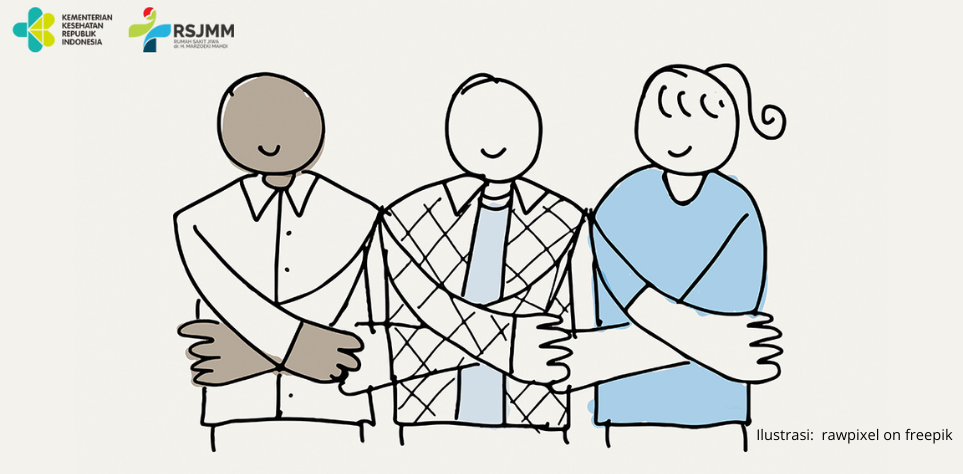
One concept related to this is Prosocial Behavior. Myers (in Sarwono, 2002) defines prosocial behavior as positive actions that benefit or improve the physical or psychological well-being of others, done voluntarily without expecting anything in return. Prosocial behavior encompasses all forms of actions undertaken or planned to help others. It originates from within an individual to bring about a change in oneself. Examples of prosocial behavior include generosity, friendship, cooperation, helping, and rescuing.
According to the theory by Carlo & Randall (2002), aspects of prosocial behavior include:
a. Altruistic Prosocial Behavior
Altruistic prosocial behavior involves motivating to help others, especially related to the needs and well-being of others. It is often driven by sympathetic responses and internalized norms or principles that are consistent with helping others.
b. Compliant Prosocial Behavior
Compliant prosocial behavior involves helping others when asked for assistance, either verbally or non-verbally.
c. Emotional Prosocial Behavior
Emotional prosocial behavior involves helping others based on emotional feelings arising from the situation.
d. Public Prosocial Behavior
Public prosocial behavior involves helping others in front of people, at least with the aim of gaining recognition and respect from others (parents, peers) and boosting self-esteem.
e. Anonymous and Dire Prosocial Behavior
Anonymous prosocial behavior is helping someone without their knowledge, while dire prosocial behavior is helping someone in a crisis or emergency situation.
According to Sarwono and Meinarno (2014), prosocial behavior is influenced by both situational and internal factors.
a. Influence of Situational Factors
1. Bystander
Bystanders or people present at the scene play a significant role in influencing an individual's decision to help or not in emergency situations.
2. Attractiveness
The extent to which someone evaluates the victim positively (finds them attractive) affects a person's willingness to provide assistance.
3. Attribution to the Victim
A person is motivated to help someone else when they assume that the victim's misfortune is beyond the victim's control. Therefore, someone may be more willing to give aid to a disabled and elderly beggar compared to a healthy and young beggar.
4. Presence of a Model
The presence of a role model engaging in helping behavior can encourage someone to provide assistance to others.
5. Time Pressure
Busy and rushed individuals tend to be less likely to help, whereas those with more time are more willing to provide assistance.
6. Victim's Need Characteristics
Willingness to help is influenced by the clarity of the victim's need, the legitimacy of the need, and the absence of internal attributions.
b. Internal Factors
1. Mood
An individual's emotions can influence their tendency to help. Positive emotions generally enhance prosocial behavior.
2. Personality
People with self-monitoring tendencies are more likely to be helpers and receive higher social recognition.
3. Gender
Gender's role in an individual's inclination to help depends on the situation and the type of assistance needed. Men are more inclined to engage in helping activities in dangerous emergency situations, such as aiding someone in a fire. In contrast, women are more likely to offer support, emotional assistance, caregiving, and nurturing in certain situations.
4. Place of Residence
People in rural areas are generally more helpful than those in urban areas.
The world becomes a more beautiful place when it is filled with kindness, echoing the theory of needs that no one can live alone. We all need love, attention, and mutual assistance, whether to people we know or strangers.
"Be the reason someone believes in the goodness of people!" - Karen Salmansohn
Author: Yosua A. Simamora, S.Tr.Sos
References:
Saprianti, Indah. 2020. “Perilaku Prososial Pada Pendonor Sukarela Di Unit Transfusi Darah PMI Palembang”, https://repository.radenfatah.ac.id/6960/2/Skripsi%20BAB%20II.pdf, diakses pada 15 Agustus 2022 pukul 10.00 WIB
Wardhani, Melati Kusuma. 2020. “Implementasi Perilaku Prososial di Dunia Kerja”, https://medium.com/javanlabs/implementasi-perilaku-prososial-di-dunia-kerja-1525141e699f, diakses pada pada 15 Agustus 2022 pukul 10.15 WIB