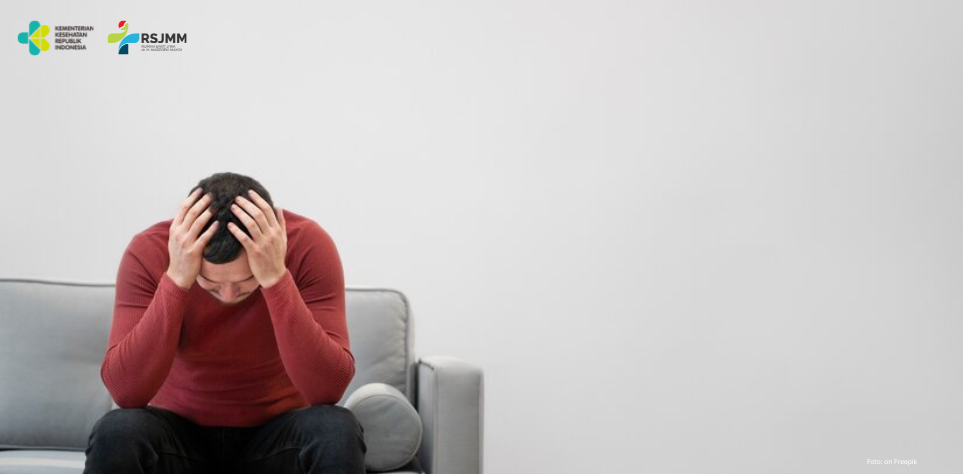
Mental disorders can be prevented if treated as early as possible
Mental disorders according to Law R.I. No. 18 of 2014 are conditions in which a person experiences disturbances in thoughts, behaviors, and feelings that manifest in the form of a set of symptoms or meaningful changes in behavior, and can cause suffering and obstacles in carrying out people's functions as humans. The manifestation of symptoms of mental disorders that appear in each person varies, ranging from mild symptoms such as anxiety / worry, sleep disorders to severe symptoms such as depression or psychosis.
Mental disorders can start from all age ranges, can appear in childhood, productive age or even appear in old age. Most people with schizophrenia are in productive age, 25-35 years. This is a problem because at that age it is expected that someone will start to be independent and productive. Mental disorders also do not suddenly appear in people who first experience disorders. Symptoms and signs of mental disorders generally appear gradually and usually start from changes in patterns or ways of thinking, feelings, emotions, or daily behavior.
For severe mental disorders such as psychosis or schizophrenia in the early phase, symptoms of the disorder are sometimes not clearly visible or even asymptomatic, commonly called the premorbid phase. Next becomes the phaseprodromal, where the symptoms are similar to changes in habits from ordinary conditions, such as withdrawing from the environment, conflicts at work/school, difficulty relating socially, or being less able to maintain personal hygiene (lazy to bathe). Symptoms before this phase of psychosis can be preceded by psychological and behavioral abnormalities for weeks, months or years. In this phase medical intervention should be carried out to prevent the condition from becoming more serious and with proper treatment schizophrenic patients can recover faster, and are more likely to be able to live independently and actively in the community.
Some studies state that treatment carried out early will provide a better prognosis, so in an effort to prevent even more severe conditions, for psychotic disorders, it is necessary to carry out prevention and early intervention to correct functional deficits. Promotive and preventive activities to intervene early in mental disorders are no longer a priority for first-level health facilities. Mental hospitals as health service institutions that provide individual health services in plenary must also carry out widespread promotion and prevention through PKRS (Hospital Health Promotion). This is in accordance with the National Medium-Term Development Plan (RPJMN) for 2020-2024, the direction of development in the health sector clearly states in it its vision, which is to prioritize the improvement of promotive and preventive services supported by innovation and the use of technology.
As a hospital that carries out services for mental disorders comprehensively, as well as in an effort to prevent functional deficits in patients with mental disorders, dr. H. Marzoeki Mahdi Bogor Mental Hospital (RSJMM) has carried out Early Psychosis (EP) services, which is an early psychotic condition in the young age group, onset in the age range of late adolescence to young adulthood (teenagers to 35 years old).
EP services at RSJMM are carried out by a community-based multidisciplinary mental health team (in collaboration with Keswamas-PKRS and D'patens24 crisis center), aiming to optimize the potential and capacity of patients to return to normal function, recover or significantly reduce psychotic symptoms, maintain medication adherence and improve daily functioning (role, work and social functions).
The concept of management in patients at the stage of Early Psychosis is slightly different from the management of mental patients in general. The services provided are friendly for early psychotic patients and families (separated from patients with other mental disorders), individual approach and treatment environment, more time and attention to communication, psychoeducation, mentoring, symptom monitoring, identification of psychosocial problems and side effects of therapy. EP services are provided in outpatient and inpatient areas such as EP screening, diagnosis and monitoring, pharmacotherapy and nursing care, patient and family psychoeducation, medication adherence strategies, stress management, social skills training, relapse prevention plan, supportive psychotherapy, and CBT, assertive follow-up, as well as patient and family sharing and discussion with self-help groups / peer support which is carried out several times a year.
Poor mental health is a major threat to the health, survival and future potential of young people around the world. According to World Psychiatry, the Official Journal of the World Psychiatry Association (WPA), Vol 1, No.1 February, 2022 is informed that there are indications of a wave of vulnerability trends and increasing mental health care needs, coupled with the Covid-19 pandemic conditions. A deep understanding of prevention, reform and urgent investment in mental health care provision is needed. The rising tide of mental health among young people globally demands that the prevention and promotion of mental disorders be elevated to a top priority in global health.
RSJ dr. H. Marzoeki Mahdi Bogor as an RSJ under the Ministry of Health always carries out innovations in line with the government's efforts in forming productive and superior human resources through the implementation of promotive and preventive programs for mental health problems earlier.
Author: Dr. Rahmi Handayani, SpKJ, MARS